Which Car Parts Are Worth Salvaging Before Scrapping Your Vehicle?
When a car reaches the end of its life, it does not mean every part is worthless. Many vehicles contain components that can be reused, refurbished, or sold to drivers looking for affordable replacement parts. Knowing which valuable car parts to salvage can help you recover more value from your old vehicle while reducing automotive waste.
Whether your car has been damaged in an accident, failed a safety inspection, or simply become too expensive to repair, identifying reusable components before scrapping it can make a difference.
In this guide, we explore the car parts worth money, the components that are commonly reused, and what Ontario vehicle owners should consider before arranging junk car removal or selling a car for scrap.
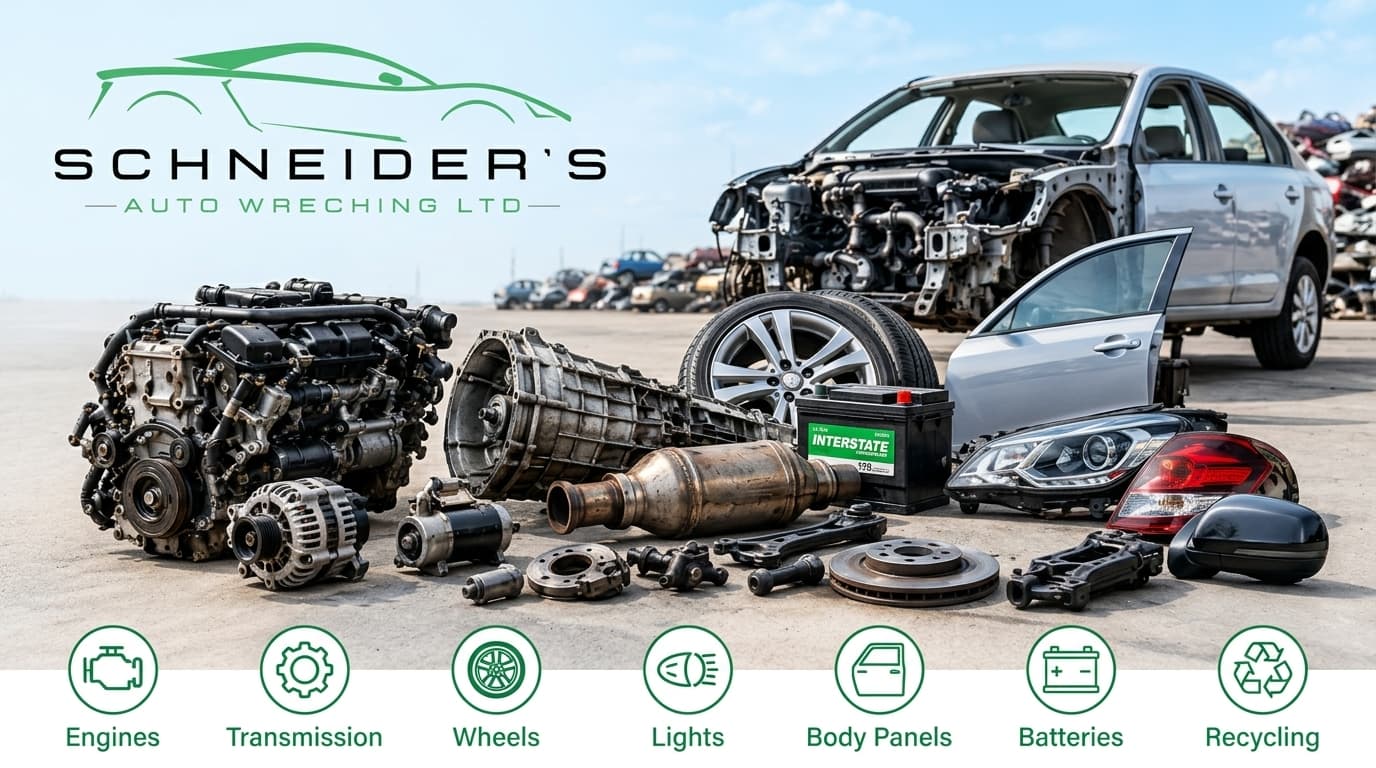
Table of Contents
Valuable Car Parts Worth Salvaging
1. Catalytic Converter
A catalytic converter is one of the potentially valuable parts found in many older vehicles. It contains precious metals, including platinum, palladium, and rhodium, which help reduce harmful exhaust emissions.
Its value depends on the vehicle's make, model, year, converter type, and condition. However, catalytic converters are subject to theft and environmental regulations, so they should only be removed and sold through legitimate channels.
Why it may be valuable:
- Contains recoverable precious metals.
- Can have recycling value even when the vehicle no longer runs.
- Value varies significantly between vehicles.
2. Engine and Engine Components
An engine can retain considerable value even when the rest of the vehicle is no longer roadworthy. If it runs properly and has been maintained, it may be suitable for reuse in another compatible vehicle.
Individual components, such as cylinder heads, alternators, starters, and certain engine accessories, may also be reusable.
Before salvaging an engine, consider its mileage, maintenance history, compression, visible damage, and compatibility with other vehicles.
Why it may be valuable:
- Replacement engines can be expensive.
- Tested used components offer more affordable repair options.
- Demand depends on vehicle popularity and parts availability.
3. Transmission and Drivetrain Components
Transmissions, differentials, transfer cases, and other drivetrain components can be valuable when they remain in good working condition.
These components are often expensive to replace, making tested used parts an attractive option for some vehicle owners and repair shops.
However, compatibility is essential. Transmission type, engine configuration, model year, and drivetrain specifications can affect whether a component will fit another vehicle.
4. Alternators and Starters
Alternators and starter motors are common examples of salvageable car parts that may be reused or rebuilt.
An alternator helps maintain the vehicle's electrical system and recharge its battery, while a starter motor helps start the engine. Both can be removed from certain end-of-life vehicles if they are accessible and in suitable condition.
Testing is important because a component that looks undamaged may still have electrical or mechanical faults.
5. Wheels, Tires, and Rims
Alloy wheels, steel rims, and tires may retain value if they are in acceptable condition.
Undamaged rims can be reused when they match the replacement vehicle's fitment requirements. Tires may also be reusable if they meet applicable safety requirements and have sufficient tread depth without structural damage.
Check for cracks, bends, uneven wear, sidewall damage, and corrosion before considering reuse.
6. Doors, Bumpers, and Body Panels
Exterior body parts are often worth salvaging after a vehicle becomes uneconomical to repair.
Doors, fenders, hoods, tailgates, bumpers, mirrors, and trunk lids can help repair similar vehicles at a lower cost than buying new replacement panels.
Paint colour, panel condition, rust, and compatibility influence their resale potential.
These components are particularly useful when a vehicle has suffered localized damage but still has undamaged sections.
7. Headlights, Taillights, and Mirrors
Lighting assemblies and side mirrors can be practical car parts worth money, especially when they are undamaged and suitable for vehicles that remain common on Ontario roads.
Modern headlights may include LED technology, sensors, or adaptive lighting features, which can affect their replacement cost and resale demand.
Before reuse, inspect the housing, mounting points, lenses, electrical connections, and any integrated electronics.
8. Infotainment Systems and Electronic Components
Radios, navigation units, display screens, control modules, window switches, and other electronic components may be reusable.
Their value depends on compatibility, functionality, and demand. Some modules require programming or pairing with another vehicle, while certain security-related components may need specialist handling.
Testing and accurate part identification can make these components easier to sell.
9. Seats and Interior Components
Seats, door panels, dashboards, centre consoles, steering wheels, and interior trim pieces can be useful when repairing older vehicles.
Clean, undamaged interiors may be especially appealing to owners restoring a vehicle or replacing worn components.
Before salvaging seats, consider airbag systems, seatbelt pretensioners, electrical adjustments, and other safety-related features. These components should be handled by qualified professionals.
10. Batteries and Other Recyclable Materials
Traditional lead-acid batteries can be recycled through appropriate battery recycling channels. Hybrid and electric vehicles may contain high-voltage battery packs that require specialized assessment and handling.
Scrap vehicles also contain recoverable steel, aluminium, copper, and other metals. Even components that cannot be reused as vehicle parts may have recycling value.
Never dismantle high-voltage battery systems yourself. Damaged batteries can present serious electrical, chemical, and fire hazards.
How to Salvage Car Parts Before Scrapping a Vehicle in Ontario
If you are preparing to scrap your vehicle, a practical approach can help you avoid unnecessary expenses.
Step 1: Identify Potentially Reusable Components
Make a list of major mechanical parts, exterior panels, wheels, electronics, and interior components that appear to be in good condition.
Step 2: Check Compatibility and Condition
Record the vehicle identification number (VIN), make, model, year, engine type, and available part numbers. Have important mechanical and electrical components tested when appropriate.
Step 3: Compare the Potential Value
Contact reputable auto recyclers or used-parts dealers to ask whether they accept the components and what information they need to assess them.
Step 4: Consider Removal Costs and Safety
Removing parts individually takes time and may require specialist equipment. Compare the expected return with labour, transport, and disposal costs. Leave airbags, fuel-system components, and high-voltage electrical systems to qualified professionals.
Step 5: Choose a Reputable Auto Recycler
A professional recycler can assess the vehicle, identify reusable components, and handle remaining materials through appropriate recycling channels. Before removing parts yourself, confirm whether doing so affects the recycler's offer or the vehicle's ownership and disposal requirements.
Ontario vehicle owners should also check applicable vehicle registration, ownership transfer, environmental, and safety requirements before dismantling or disposing of a vehicle.
Where to Find Reusable Auto Parts in Ontario
Finding dependable reusable auto parts Ontario drivers can use involves more than choosing the lowest price. Buyers should confirm that parts are compatible with their vehicle and ask about testing, condition, warranties, and return policies.
Used auto parts can offer a cost-effective alternative to new components for many repairs, particularly when the replacement part is difficult to source or expensive to purchase new.
When buying used auto parts Ontario suppliers offer, provide your vehicle's VIN and the original part number whenever possible. This helps reduce compatibility problems and unnecessary returns.
For vehicle owners preparing to scrap an old car, working with an experienced auto recycler like Schneider’s Auto Wrecking can also help identify which components have realistic reuse or recycling potential.
Frequently Asked Questions
Which car parts are worth the most when scrapping a vehicle?
The engine, transmission, catalytic converter, and certain electronic or drivetrain components may have substantial value. Actual prices depend on condition, vehicle specifications, demand, and local recycling requirements.
Can I sell car parts from an old vehicle in Ontario?
In many cases, reusable components can be sold, subject to applicable ownership, safety, environmental, and other legal requirements. Confirm the relevant requirements and any recycler-specific conditions before removing parts.
Are old car parts worth selling if the vehicle does not run?
Yes. A vehicle that no longer runs may still contain working electrical components, body panels, wheels, interior parts, and mechanical assemblies. The condition of each component matters more than whether the entire vehicle can be driven.
Is it better to sell individual parts or scrap the whole car?
Selling individual components may generate more revenue, but dismantling involves additional labour, time, storage, and disposal responsibilities. Selling the complete vehicle to a reputable recycler or choosing professional junk car removal may be more convenient. Compare both options before deciding.
What should I do with car parts that cannot be reused?
Components that are unsuitable for reuse may still be recyclable. Work with an appropriate auto recycler to manage metals, batteries, fluids, and other materials responsibly.
Final Thoughts
Scrapping a vehicle does not mean every component has reached the end of its useful life. From engines and transmissions to wheels, body panels, electronics, and interior components, many valuable car parts to salvage can support affordable vehicle repairs and responsible recycling.
The key is to evaluate each component's condition, compatibility, demand, and recovery cost before deciding what to keep or sell.
Whether you are retiring an old vehicle or searching for affordable replacement components, understanding the value of reusable parts can help you make a more informed decision while giving suitable automotive materials a second life.
Ready to Turn Your Scrap Car Into Instant Cash?
Contact Schneider’s Auto Wrecking today for a transparent cash offer with 100% free scrap car pickup across Rostock, Stratford, Kitchener, Waterloo, London & all Ontario.